Digital Experiences
WEB/MOBILE/INTERACTIVE EXPERIENCESDesigning Where Brand Meets the Screen
I was designing for screens long before digital design became its own discipline. I built websites when layouts were made with tables and frames, learned Macromedia Director when interactive CD-ROMs were still a thing, moved into Flash and ActionScript, and eventually into responsive web, mobile products, UI/UX and interactive experiences. The tools changed constantly. The job underneath them didn't: understand what someone needs to do, make it intuitive, and use design to make the experience feel like the brand.
As my career grew, my primary focus shifted toward creative direction and global brand systems. Digital never disappeared. I continued working closely with digital teams, reviewing and shaping experiences, providing brand direction and getting back into the files when the work needed me. Looking through an old hard drive recently reminded me how much of that foundation sits underneath the work I do today.
Landry's Seafood App
Designing the journey before the screen
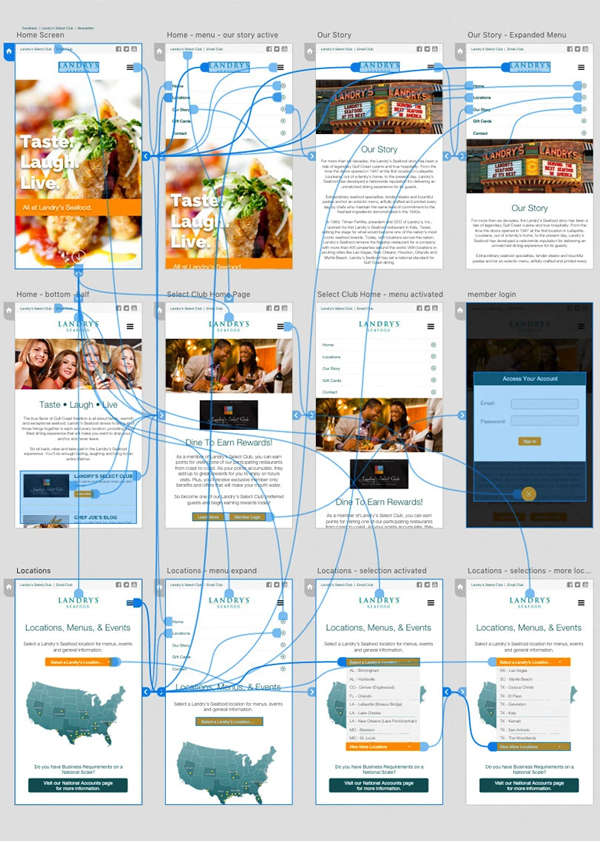
The finished screens are only part of the design. For Landry's Seafood, I mapped the mobile experience across navigation, restaurant locations, menus, brand storytelling and Select Club account access before resolving the final interface. The prototype allowed the experience to be clicked and tested as a system rather than reviewed as a collection of static comps.
The work moved from information architecture and interaction paths into visual design and a functioning Adobe XD prototype, with particular attention to making a large restaurant organization understandable on a small screen.
Cash is...
Turning a campaign into participation
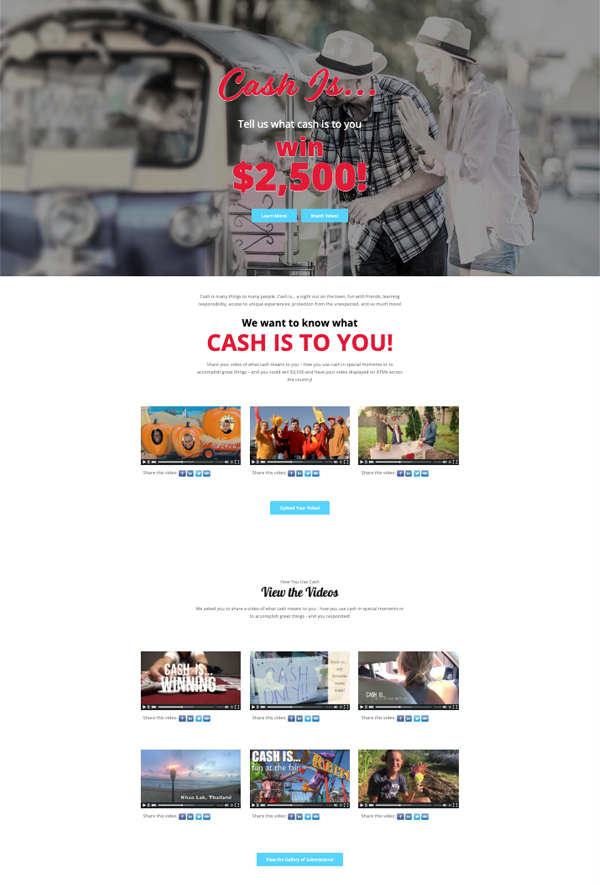
Cash is... needed people to participate, not simply see the campaign. I designed the digital experience that allowed people to record their own answer, upload a video and explore submissions from others. The challenge was making participation feel simple while handling the functional requirements of file uploads, forms and submission guidelines without letting the mechanics overwhelm the idea.
The campaign generated millions of impressions and hundreds of thousands of video views, then extended into B2B trade show environments to bring the consumer story directly to retail partners. The work earned 1st Place Digital at the 2018 ATMIA Industry Awards for WhatIsCash.com and the Cash Is campaign.
ATM Network
From brochure site to digital storefront (View project)
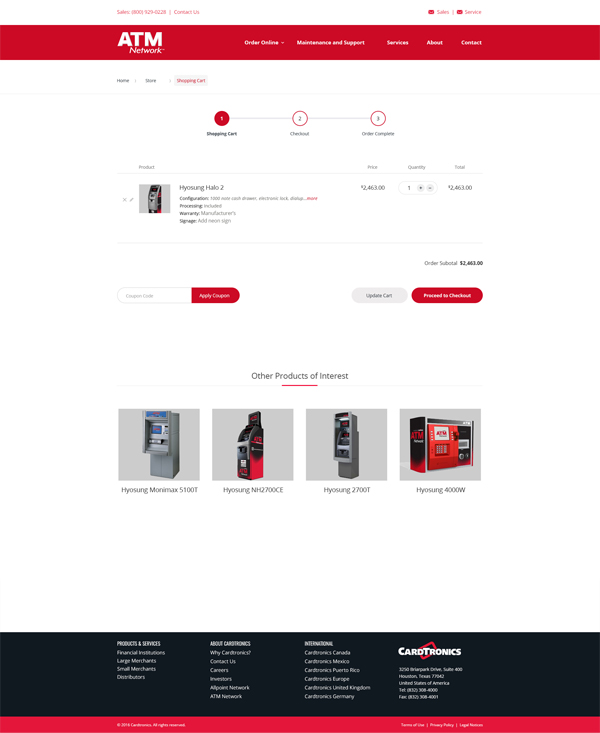
ATM Network's website was primarily a place to learn about the company and its products. We saw an opportunity to make it useful after the sale, too. I developed the front-end strategy, UI/UX and visual design for a new experience that would move the site toward full ecommerce. Customers could research and order ATMs, purchase supplies and signage, and access maintenance and support content for the machines they already owned. The goal was to create a digital destination that supported more of the customer relationship while giving ATM Network something its competitors didn't offer.
The front-end experience and interface direction were developed and ready to move into build when the larger initiative lost funding. It never became the finished platform we envisioned, but the work represents an important part of how I was thinking about digital even then: a website shouldn't just explain what a business does. It should help the business do it.
Oilpro
Turning visibility into a paid product
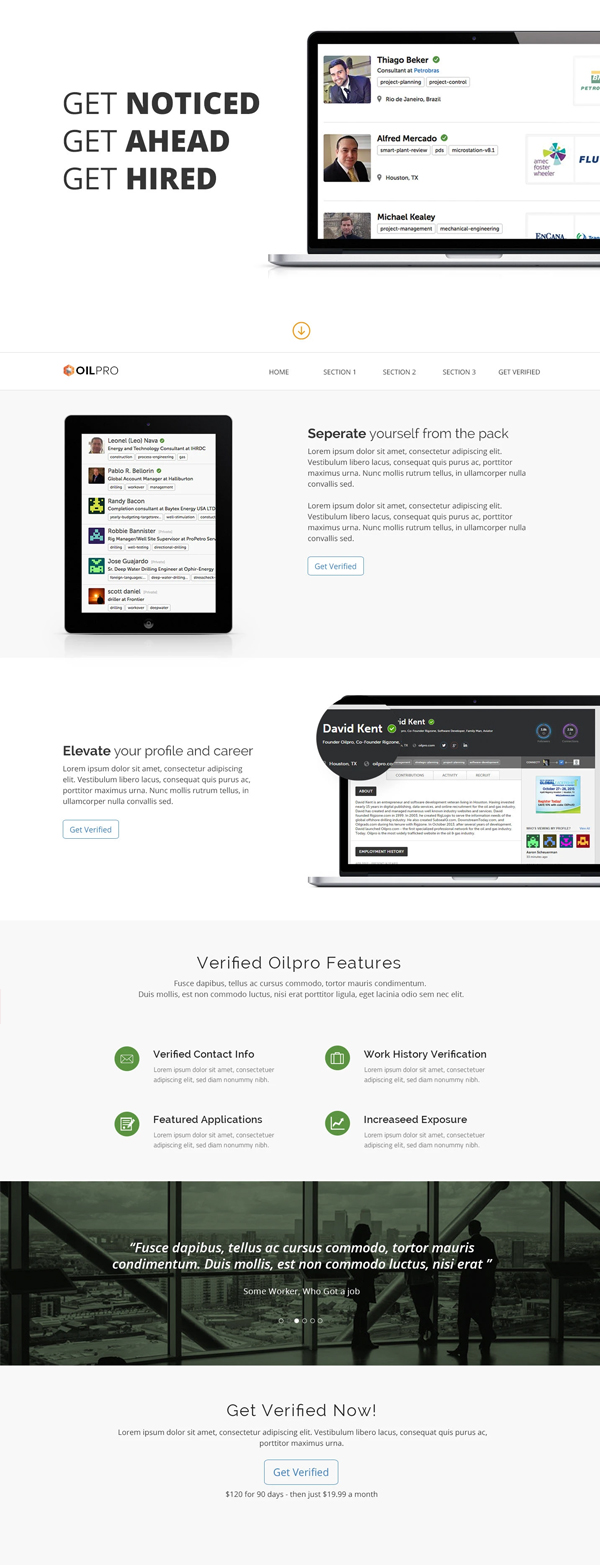
Oilpro’s Get Verified was a premium feature designed to give candidates greater visibility to employers and recruiters. The challenge was to position it as a professional advantage worth paying for, not simply another platform upgrade. I led the creative direction from early sketches and wireframes through the final experience, working through how we introduced the product, communicated its value and created a clear path to subscription.
I worked directly with development as the feature moved from concept to launch. Get Verified saw immediate user buy-in and strong early subscription adoption, creating a new recurring revenue stream for Oilpro.
THE TOOLS CHANGED. THE THINKING DIDN'T.
Director. Flash. Dreamweaver. HTML and CSS. Photoshop comps. Adobe XD. Figma. I've worked through enough generations of digital tools to know that the software is rarely the interesting part. What stayed with me was learning to think in systems: what happens when someone clicks this, where they go next, what they need to know, how a brand behaves when it becomes interactive, and how design decisions survive development and production.
A few years ago my primary focus shifted from digital experiences toward global brand systems and creative leadership. I didn't leave that knowledge behind. It became part of how I approach everything else. I don't think of physical, digital, experiential and brand as separate kinds of design. They're different places where someone meets the same brand. My job is to make sure it holds up when they do.